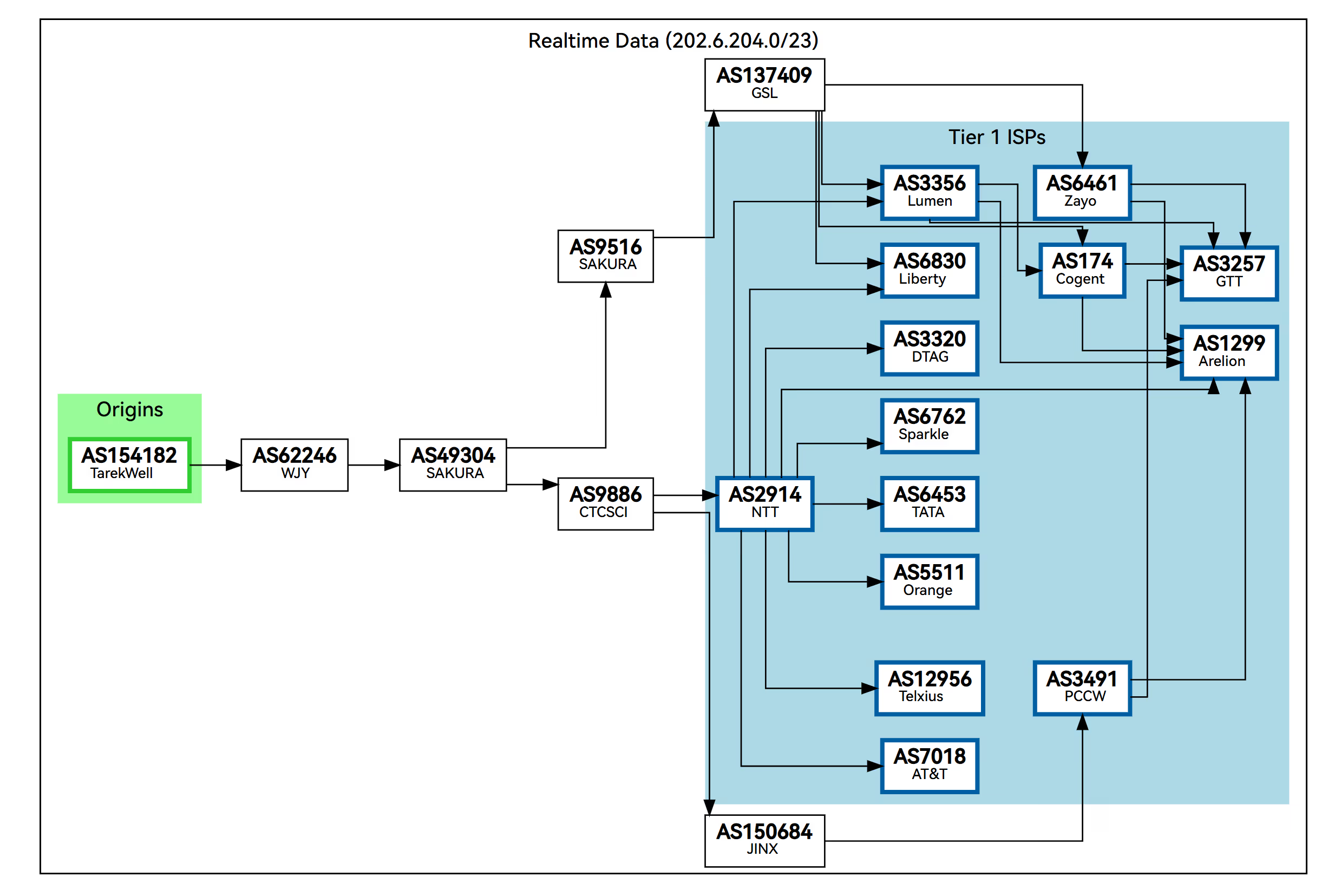
Tarekcloud EPYC Purchase Experience: Super-Sized Specs, Super-Sized Headaches
The specs are very tempting, but stability is a real concern. This article only reflects my personal real-world experience.
How It Started
On September 25, I bought a “super-sized” EPYC plan during Tarekcloud’s EPYC promotion. Judging from the specs and price, this machine was pretty much unbeatable at the same price point. But reality once again confirmed the old saying: when something is cheap, someone has to pay for it.
When the Problems Began
From day one after activation, the problems started. The EPYC 7763 instance began experiencing random reboots, and then the reboot interval stabilized at once every 2–8 hours. After each reboot, it took 5–10 minutes for the machine to come back online.
For an entire week, the server was in a state of intermittent downtime, making it almost impossible to run any service reliably.
Ongoing Failures and Migration
The issue persisted until October 3, when the provider decided to abandon that machine entirely and migrated the whole system and platform to another new machine, 7B13. So far, the fault has not reappeared.
Provider’s Response
Tarekcloud’s explanation was:
The EPYC series belongs to a “resold on behalf of” lineup, different from their self-operated Gold series (which is self-purchased, self-tested, then listed). These resold machines are not fully tested before shipping and may have “mixed memory modules,” which can cause random reboots.
In other words, what they’re selling is someone else’s procured SR655, not hardware they purchased and tested themselves. But even so, their supposedly self-purchased-and-tested Gold series also suffered outages during this period.
Compensation Plan
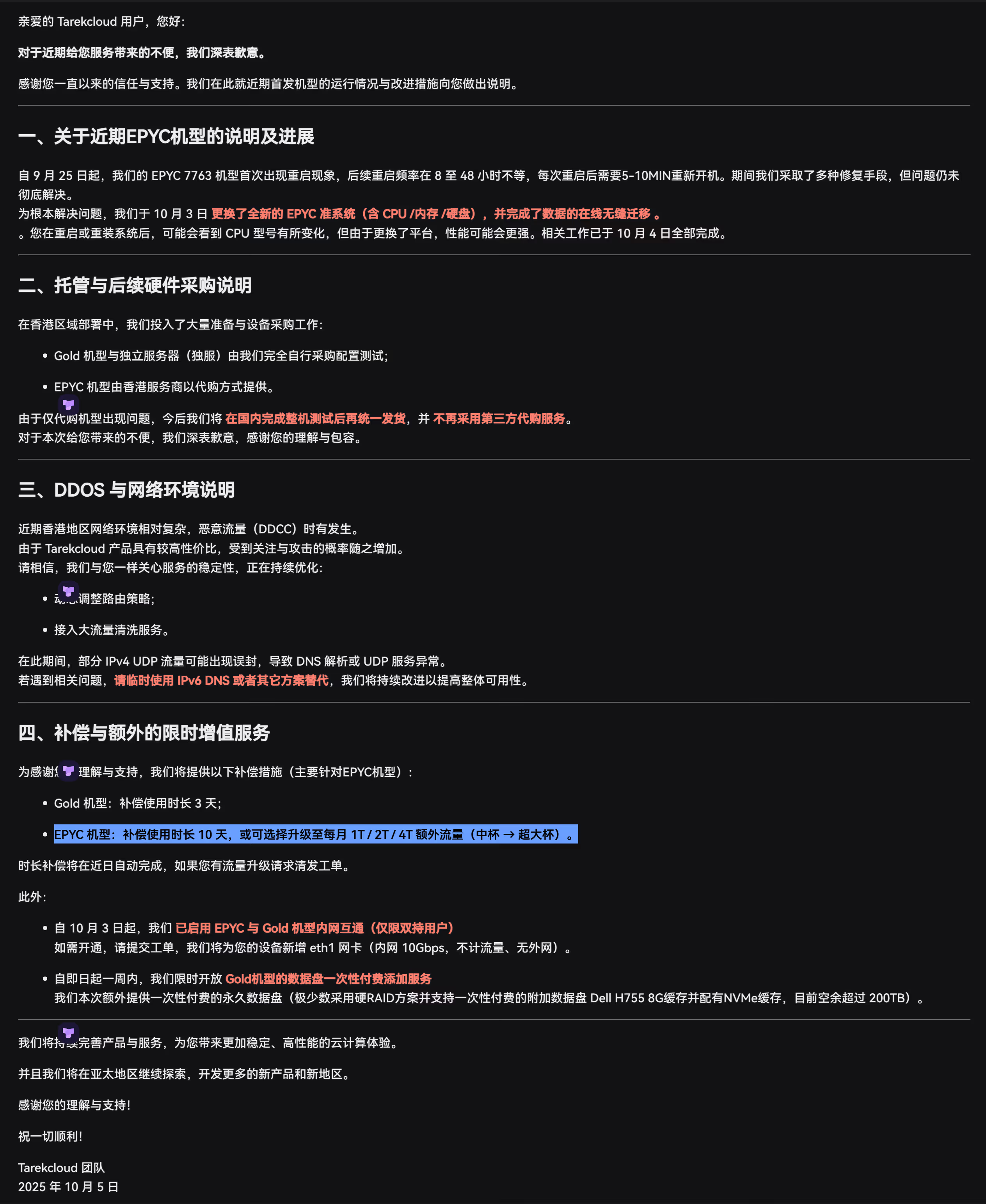
Tarekcloud’s compensation offer was:
- Extend EPYC plan usage by 10 days, or
- Upgrade monthly bandwidth by an extra 1T / 2T / 4T of traffic (choose one of the three).
On paper, it sounds reasonable. But considering I could barely use the machine normally from day one, this compensation is basically better than nothing, but not by much. It essentially just makes up for the ten lost days.
Harsh Takeaways
- Quality control is lacking;
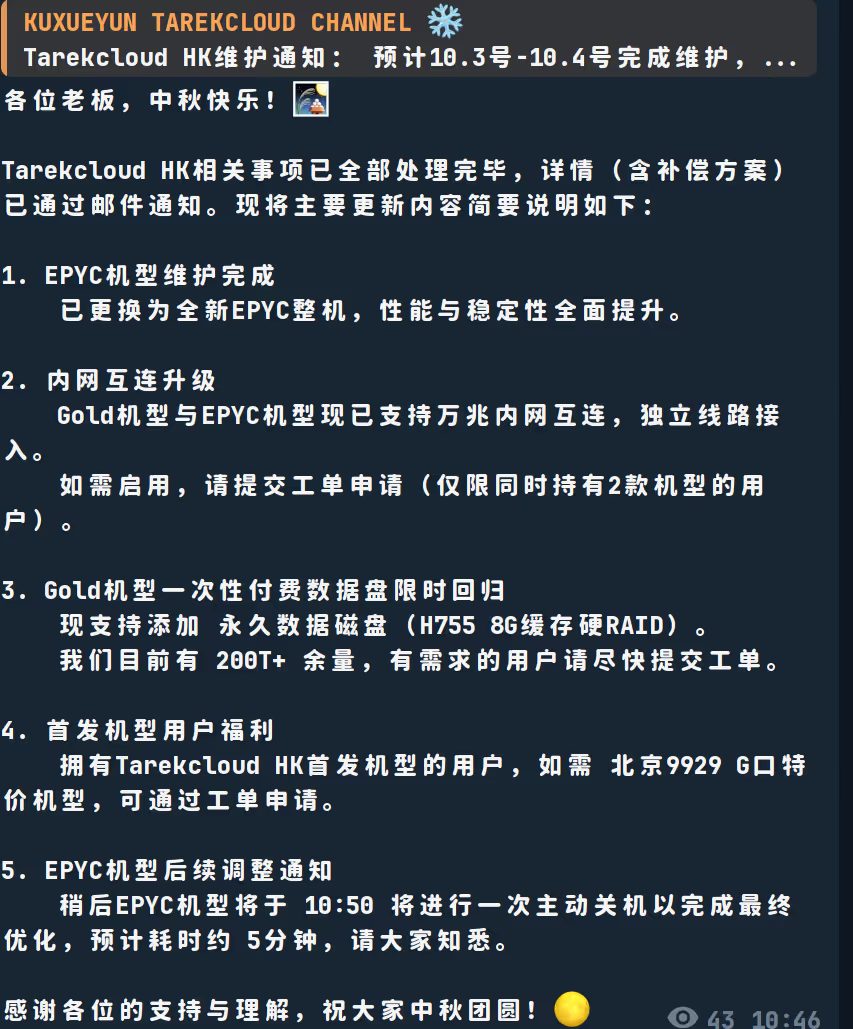
- Although the admin responds very quickly in the Telegram group, all operational notices are only posted there. There are zero email notifications — everything is done on a whim.
- They sent a Telegram notice at 10<46> saying they would shut down the machine for maintenance at 10<50>.
Who can possibly react and migrate that fast?
About the CPUs
Although the provider called it an upgrade, switching from 7763 to 7B13 is in fact a downgrade from the user’s perspective. The following data is from CPUBenchMark.
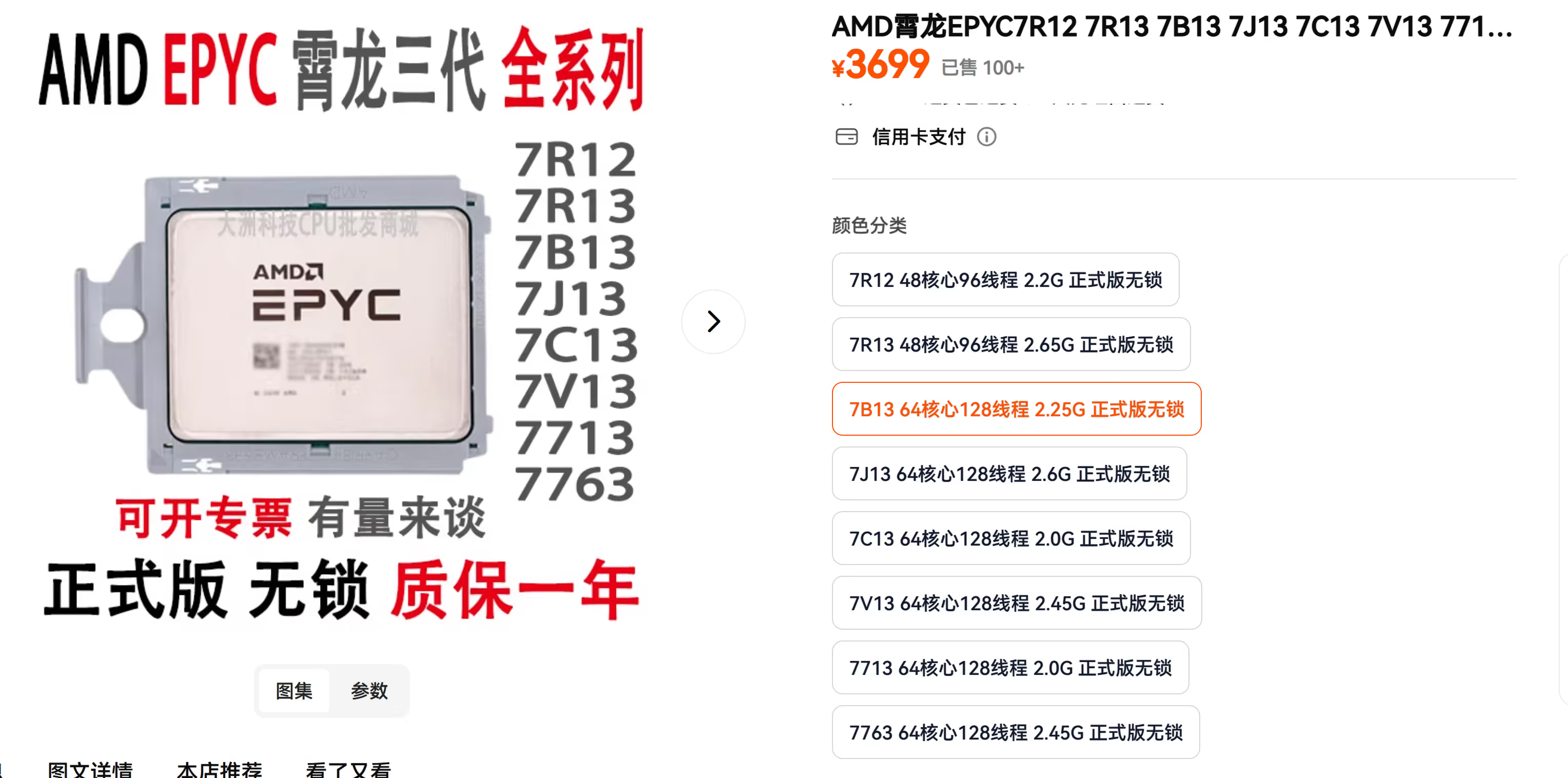
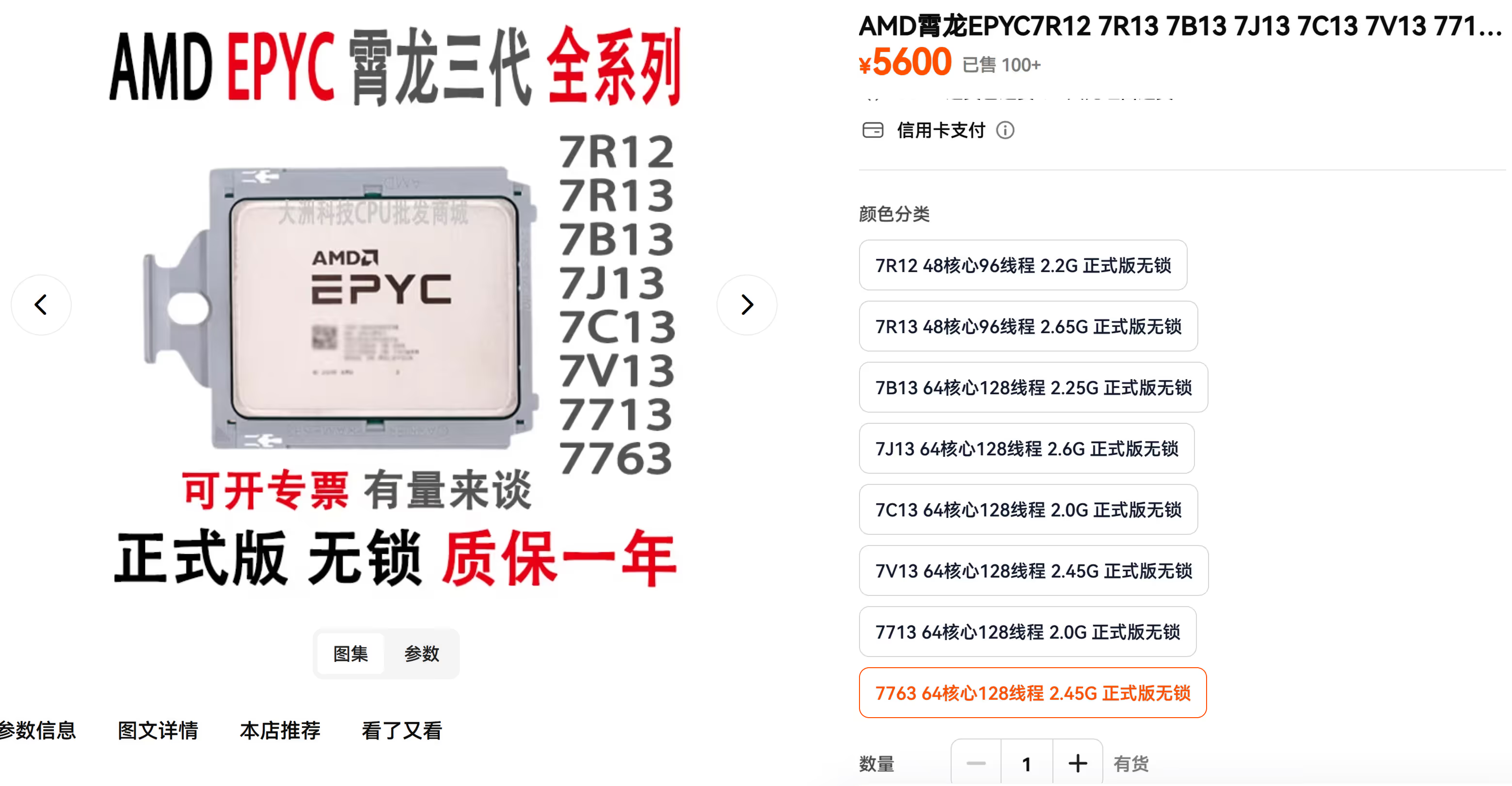
Right now, the 7763 goes for around 5,600 CNY, while the 7B13 sells for about 3,699 CNY (data from any random Taobao store).
| Item | AMD EPYC 7B13 | AMD EPYC 7763 |
|---|---|---|
| CPU Type | Server | Server |
| Base Clock | 2.2 GHz | 2.5 GHz |
| Boost Clock (Turbo) | Up to 3.5 GHz | Up to 3.5 GHz |
| Physical Cores | 64 (128 threads) | 64 (128 threads) |
| Cache | L3 256 MB | L1 64 KB / L2 0.5 MB / L3 32 MB |
| TDP | 240 W | 280 W |
| Annual Running Cost | $43.80 | $51.10 |
| First Appeared in Charts | Q3 2021 | Q1 2021 |
| Sample Size | 22 | 55 |
| CPU Value Score | 0.0 | 64.0 |
| Single-Thread Performance (% diff) | 2534 (0.0 %) | 2518 (−0.6 %) |
| Multi-Thread / CPU Mark (% diff) | 78064 (−7.7 %) | 84591 (0.0 %) |
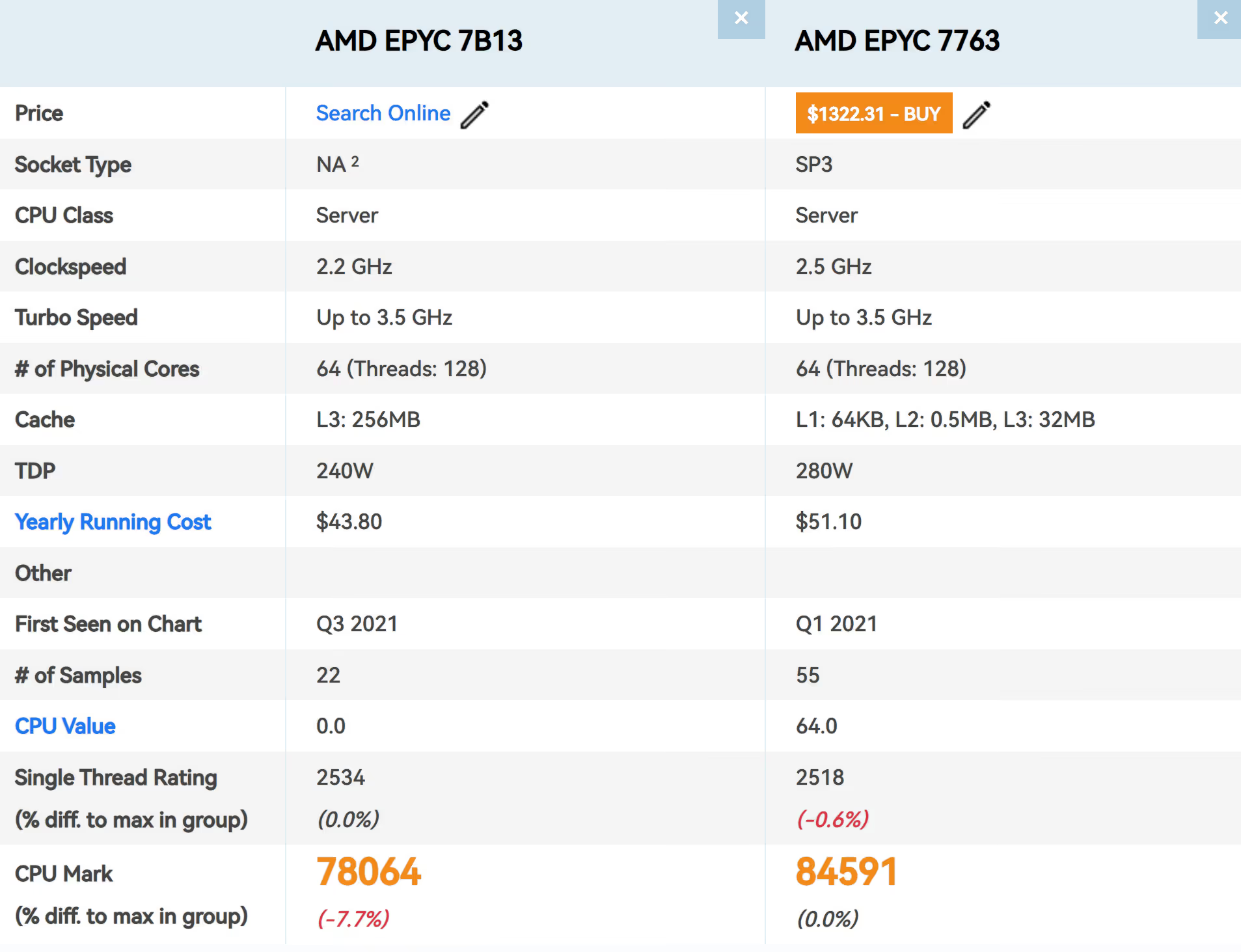
In short: 7B13 is slightly weaker in real-world performance, a bit more power efficient, and cheaper. This so-called “upgrade” is really just a swap to a more obscure, cheaper CPU.
Conclusion
This supposedly “super-sized” EPYC experience turned out to be a super-sized disaster.
When something is cheap, someone has to pay for it — and that applies to both users and providers.
Plan Details
-
Provider: Tarekcloud
-
Type/Plan: HongKong EPYC Super-Sized
-
Processor: AMD EPYC 7B13 64-Core Processor
-
Num of Core: 8 Cores
-
Memory: 48 GB
-
Storage: 4****00 GB NVMe
-
Bandwidth: 20000GB @ 3 Gbps IN | 3 Gbps OUT
-
Location: HK
Benchmarks
Yabs
Basic System Information:---------------------------------Uptime : 0 days, 0 hours, 9 minutesProcessor : AMD EPYC 7B13 64-Core ProcessorCPU cores : 8 @ 2445.404 MHzAES-NI : ✔ EnabledVM-x/AMD-V : ✔ EnabledRAM : 47.0 GiBSwap : 0.0 KiBDisk : 393.6 GiBDistro : Debian GNU/Linux 13 (trixie)Kernel : 6.12.48+deb13-amd64VM Type : KVMIPv4/IPv6 : ✔ Online / ✔ Online
IPv6 Network Information:---------------------------------ISP : Asia Pacific Network Information CenterASN : UnknownHost : Asia Pacific Network Information Center, Pty. LtdLocation : South Brisbane, Queensland (QLD)Country : Australia
fio Disk Speed Tests (Mixed R/W 50/50) (Partition /dev/vda1):---------------------------------Block Size | 4k (IOPS) | 64k (IOPS) ------ | --- ---- | ---- ----Read | 285.45 MB/s (71.3k) | 1.09 GB/s (17.1k)Write | 286.20 MB/s (71.5k) | 1.10 GB/s (17.2k)Total | 571.66 MB/s (142.9k) | 2.20 GB/s (34.4k) | |Block Size | 512k (IOPS) | 1m (IOPS) ------ | --- ---- | ---- ----Read | 1.36 GB/s (2.6k) | 1.51 GB/s (1.4k)Write | 1.44 GB/s (2.8k) | 1.61 GB/s (1.5k)Total | 2.80 GB/s (5.4k) | 3.13 GB/s (3.0k)
Geekbench 5 Benchmark Test:---------------------------------Test | Value |Single Core | 1092Multi Core | 7328Full Test | https://browser.geekbench.com/v5/cpu/23828323
YABS completed in 3 min 4 secIP Quality
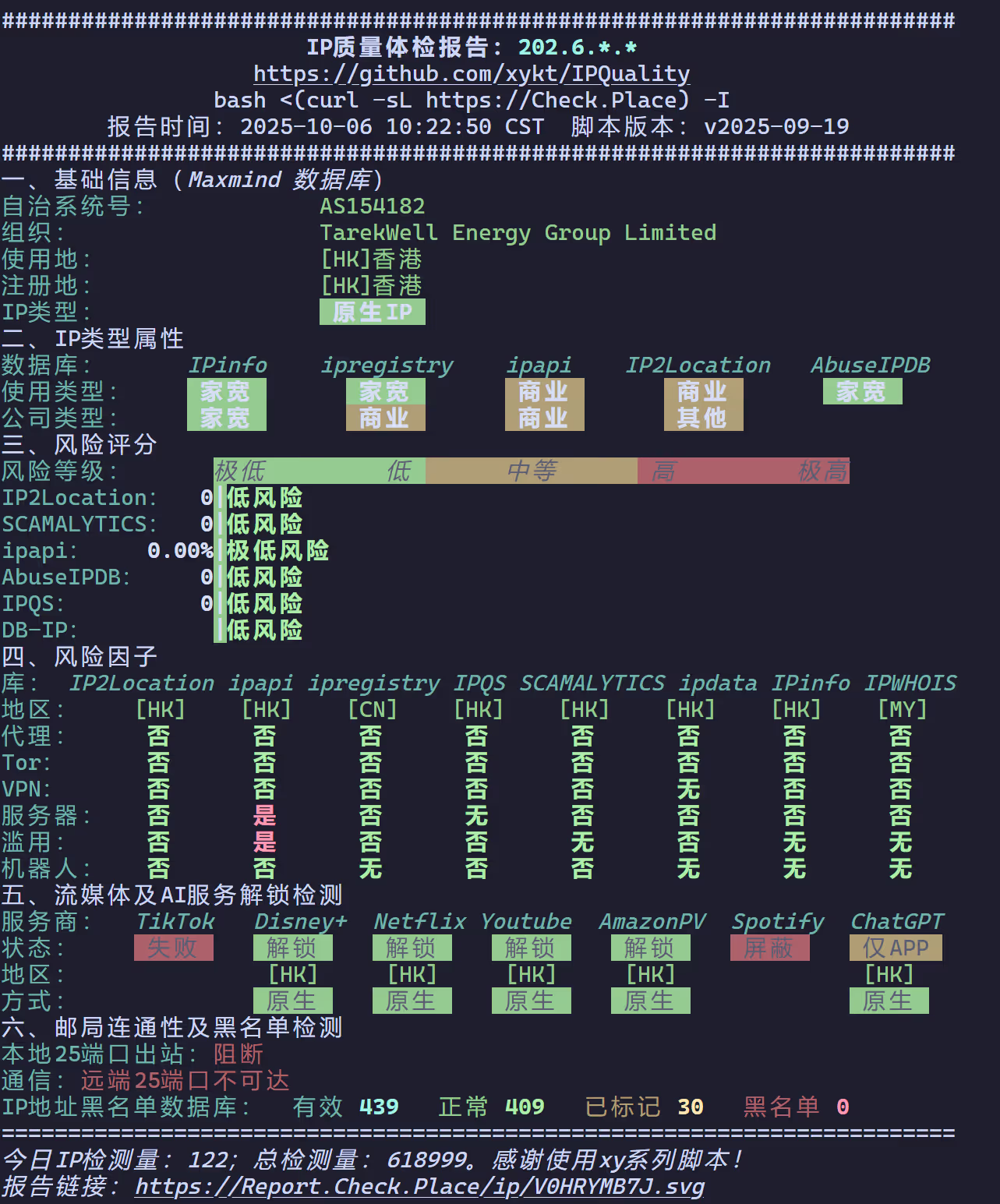
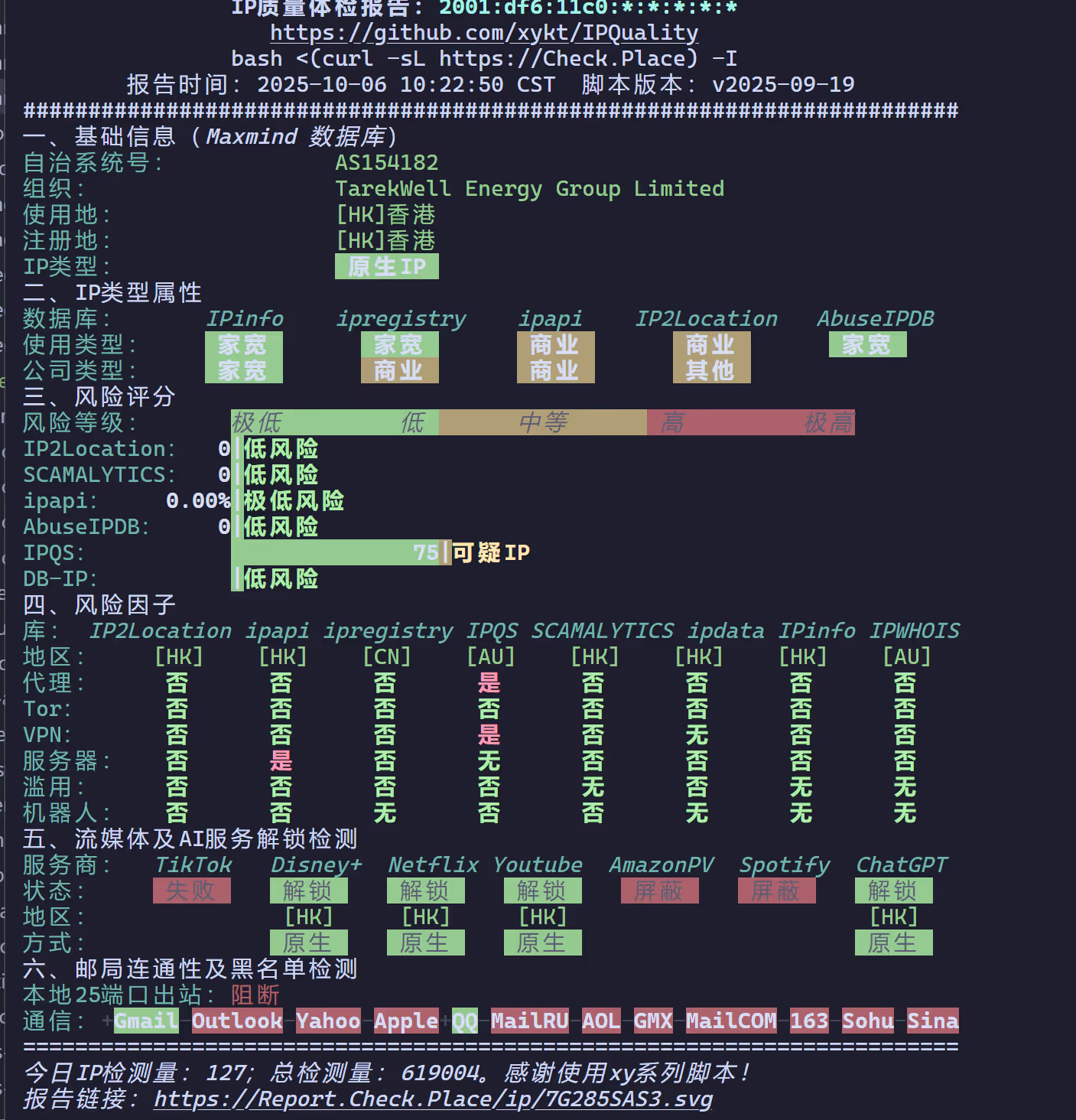
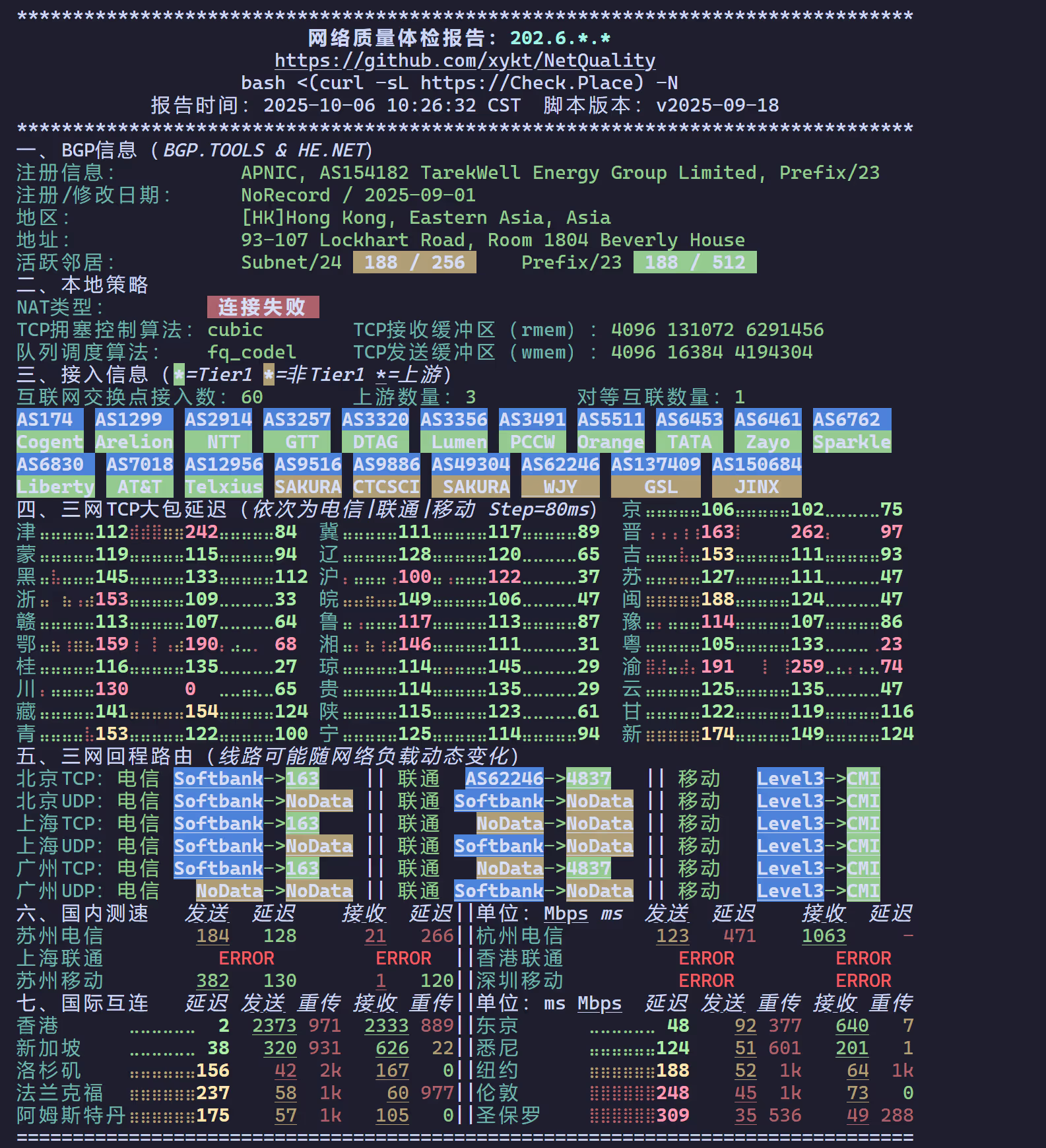
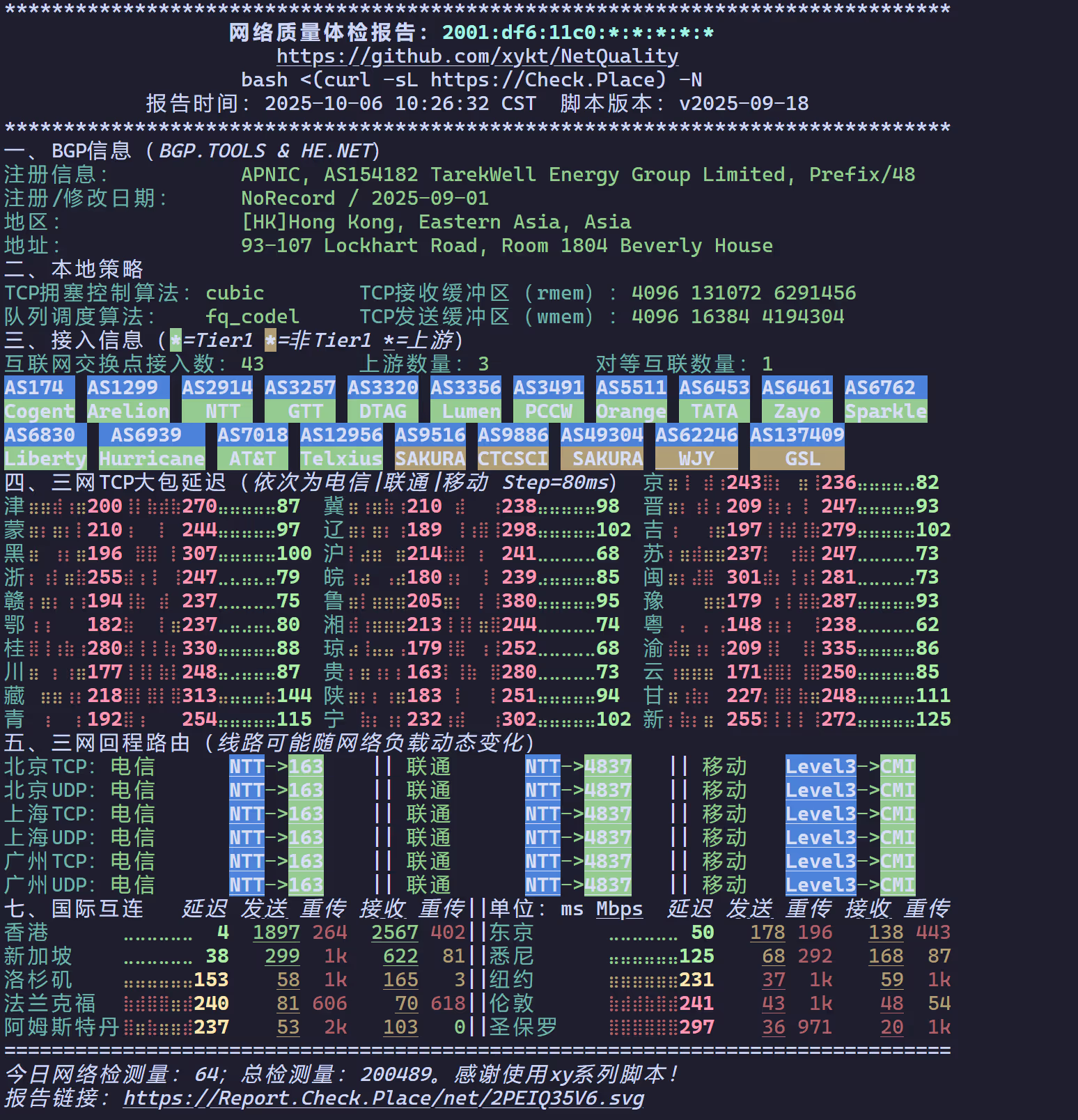
Network Quality
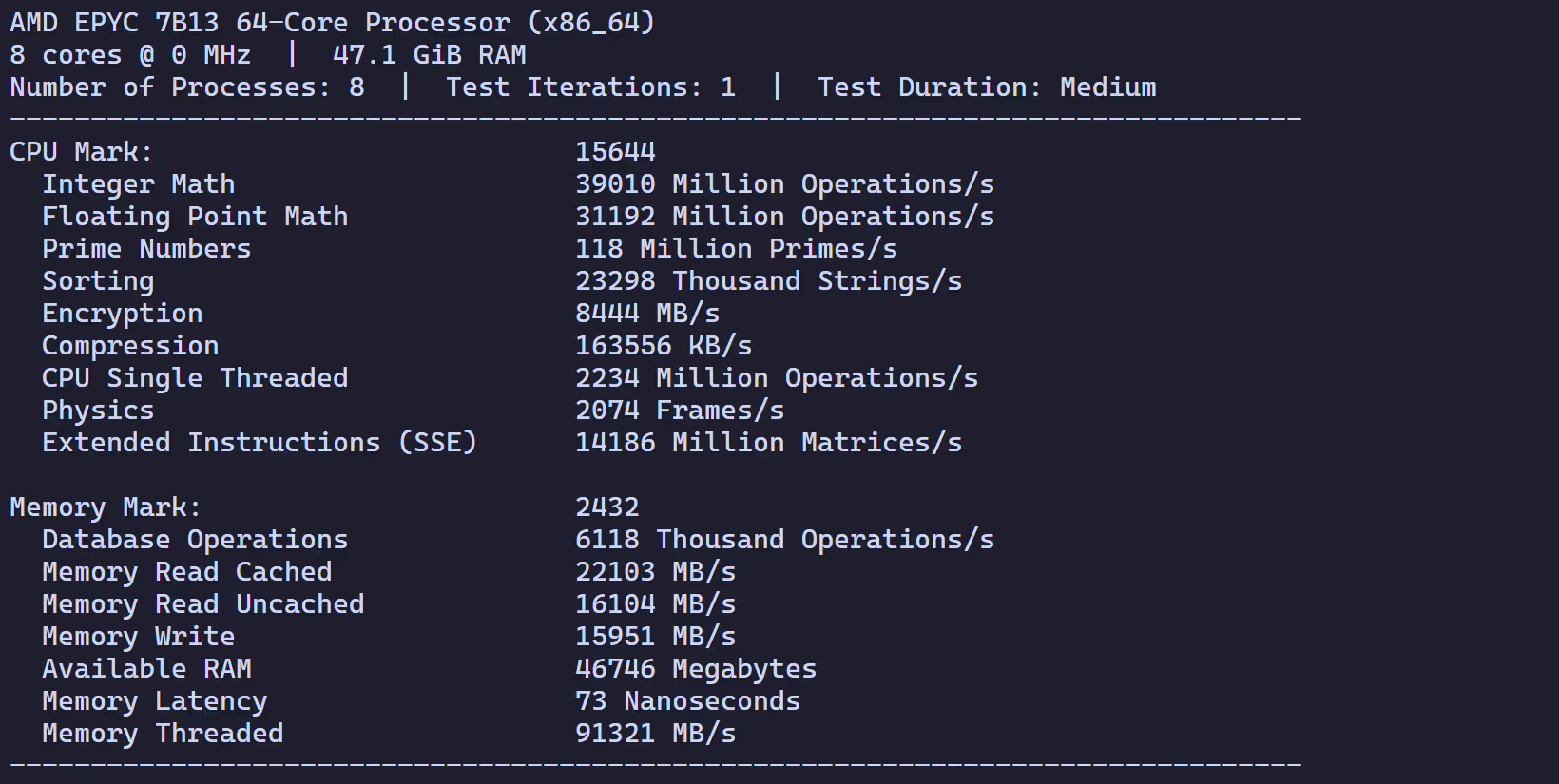
PassMark PerformanceTest Linux
BGP